 Code, Noted
Architecture
Architecture review as an institution
Review boards drift toward theater or gatekeeping unless designed against both. Notes on making the review a working institution rather than a ritual.
Code, Noted2 min readArchitecture
Organizations above a certain size always reinvent the architecture review, because the alternative (discovering incompatible systems at integration time) is worse. What they reinvent varies enormously in usefulness, and the variance is institutional design, not the talent in the room.
The two failure modes are old enough to have furniture. The first is the gate: a board that must approve designs before work proceeds, which optimizes for the board's comfort and teaches the organization to write documents that survive review rather than documents that are true. The second is the salon: a discussion forum with no authority at all, where interesting conversations conclude nothing and the actual decisions happen elsewhere, later, undocumented. The gate breeds resentment; the salon breeds nostalgia. Neither breeds architecture.
The institutions that work share three design choices, none of them about seniority. First, they review decisions, not designs. A design is a hundred decisions, ninety of which are fine; the review that tries to bless all hundred exhausts everyone and still misses the two that matter. The working format asks teams to bring the decisions they are least sure of, stated as decisions ("we will serialize with X because Y") rather than as diagrams to admire.
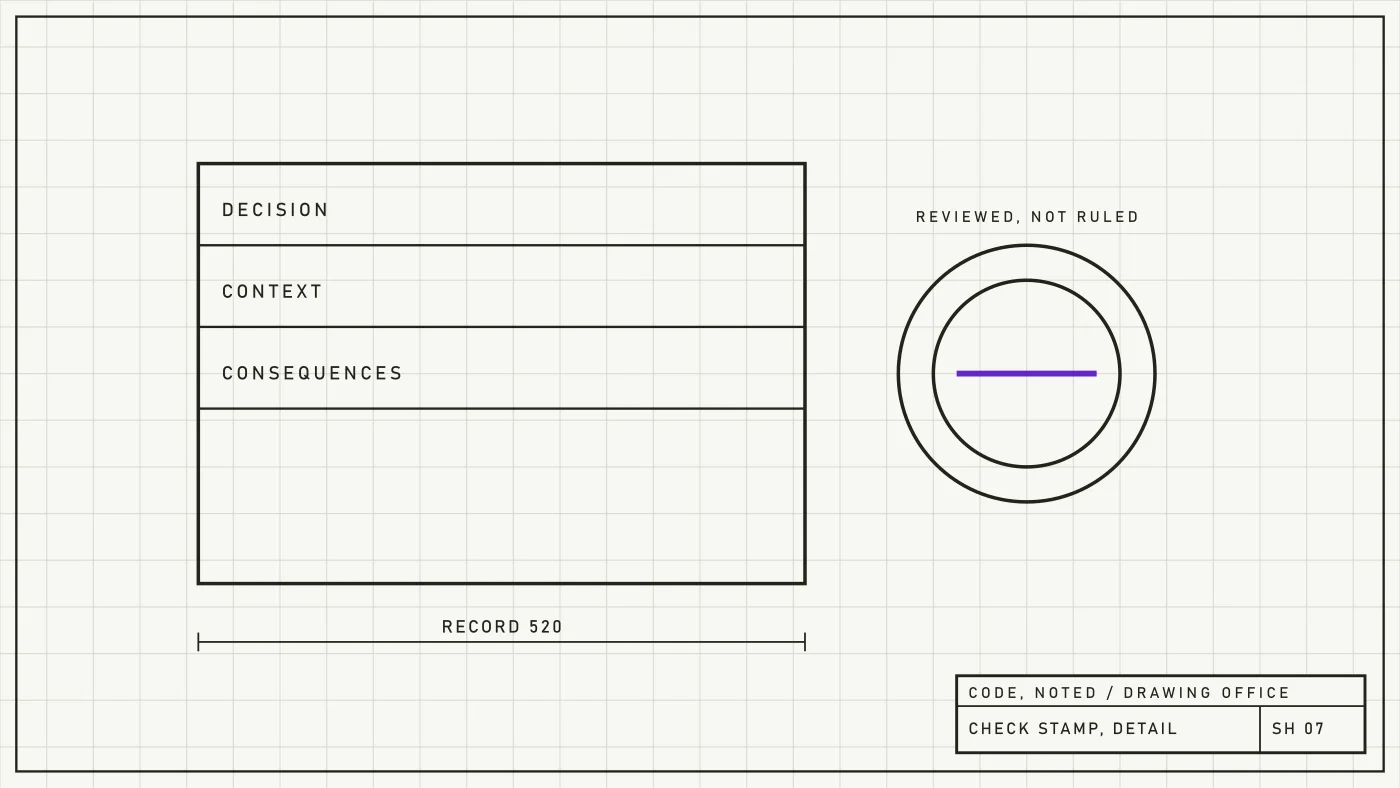
Second, the review's output is a record, not a verdict. Michael Nygard's architecture decision records gave this a lightweight form in 2011: context, decision, consequences, dated. The record's value compounds. Two years later, nobody has to reverse-engineer why the queue exists from the shape of the scar tissue; the reasoning is on file, along with what would have changed it, a practice the review-shaped consultancies have built whole offerings on.
Third, attendance is advisory and asymmetric: the reviewers' authority comes from being demonstrably useful, not from the org chart. The healthiest boards this writer has observed had a rule that any team could decline the advice by writing down that they declined it and why. Almost nobody exercised the option, which is the point. The option's existence changes the meeting from inspection to consultation, and the written declination keeps the few real disagreements honest and datable.
There is a staffing subtlety: rotating practitioners through the review seats beats a standing council. Standing councils drift into a house style and away from production; rotation keeps the advice current and spreads the institution's judgment outward, which is the actual product. A review board's success metric is how rarely it is surprised, and the only way to lower surprise is to export taste faster than the org grows.
Institutions are how organizations remember. Code reviews institutionalized the memory that unread code rots; postmortems, the memory that incidents repeat. The architecture review, done as decisions plus records plus consultation, institutionalizes the memory that the expensive mistakes are cheap to discuss and ruinous to discover. Done as a gate or a salon, it institutionalizes meetings. The choice, unusually for architecture, is entirely within one's control.