 Code, Noted
Modernization
Enterprise AI is an integration problem
The model is the easy part. Enterprise AI succeeds or fails on the same unglamorous surfaces as every prior integration wave.
Code, Noted2 min readModernization
Strip the novelty from an enterprise AI initiative and the work that remains is familiar to anyone who lived through ERP, SOA, or the API decade: identity, data plumbing, permissions, audit, and the org chart. The model is a component. The project is an integration, and integrations fail at the seams, not at the center. The seams themselves, the connective code between systems, are a system too, and the glue deserves an owner here as much as in any prior wave.
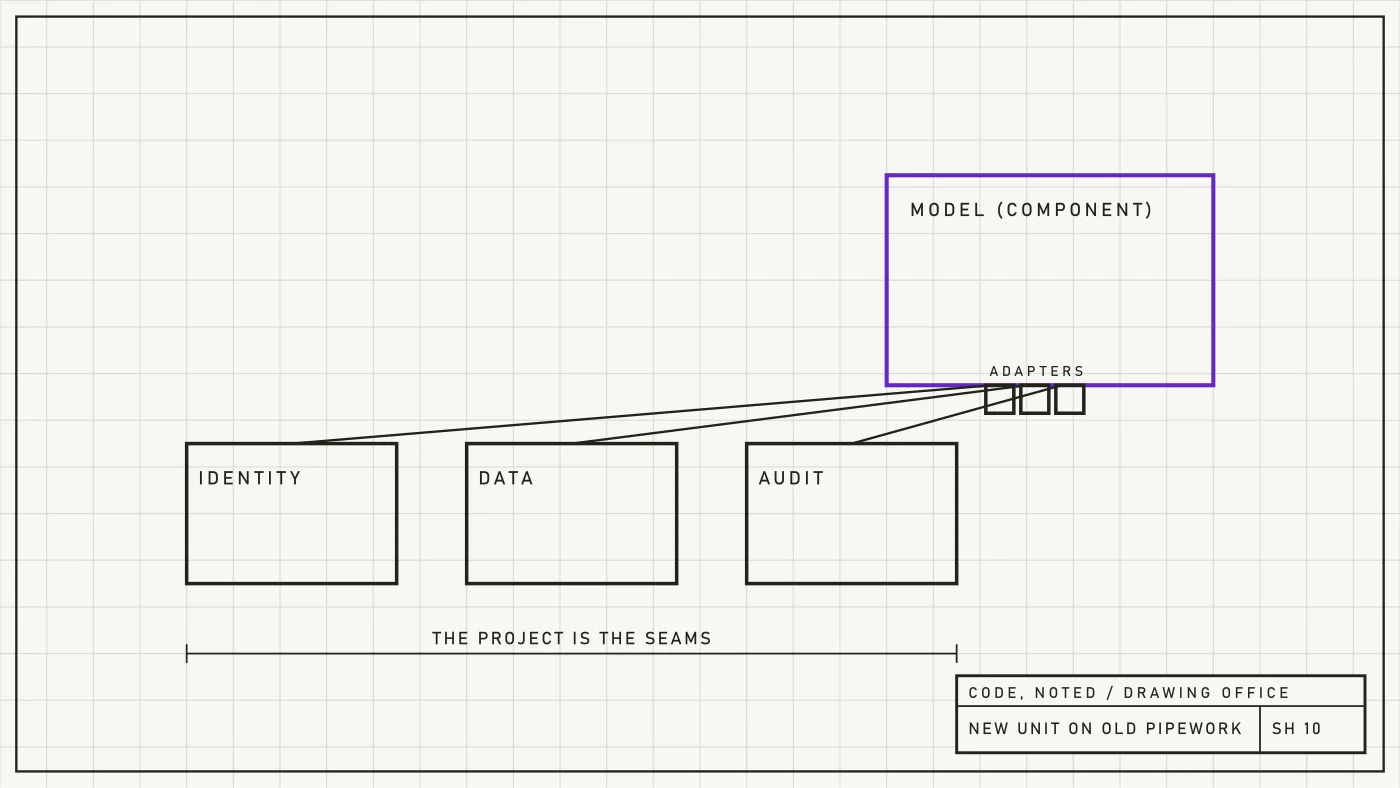
The evidence accumulates in every large shop the same way. The proof of concept dazzles, because a demo is allowed to skip the seams: it runs as one enthusiast's credentials, reads a curated folder, and answers to nobody. Production is where the questions that killed prior integration waves return wearing new badges. Which documents may this assistant read on behalf of which employee? That is not an AI question; it is the access-control problem, and if the enterprise's permissions are a fiction (they usually are), the assistant becomes a very fast fiction-discovery engine, exactly where confidence stops being a permission system. What did it see when it answered? Audit. Who pays for the tokens the intern's scheduled job burns? Metering and chargeback, circa every platform ever.
The industry has at least begun standardizing the seams. The Model Context Protocol, released in late 2024 and broadly adopted since, is instructive precisely because of what it is: not a smarter model but a plainer socket, a standard way to hand tools and data to whatever model shows up. Protocols of this shape (ODBC, LDAP, OAuth) are what integration waves leave behind when the excitement drains away, and their arrival is usually the sign that the real work has started.
Treating the initiative as an integration reorders the budget in ways executives rarely expect. The data inventory comes first, and it is the long pole: an assistant grounded in stale wikis confidently serves stale answers, so the neglected corpus cleanup that no one funded for a decade becomes, suddenly, the AI roadmap. Identity comes second; the assistant must act as the user, not as a super-service account, or the security review will (correctly) end the project. Evaluation comes third, and it is just testing with new units: golden questions, regression suites, a definition of wrong. The model API key is the cheapest line on the sheet.
There is also a familiar organizational failure available, and most enterprises are availing themselves of it: the AI Center of Excellence as a new silo, issuing frameworks from a distance. The prior waves suggest the alternative that works, embedded expertise plus paved-road tooling, for the reasons platform teams learn in their second act. A capability this horizontal either becomes part of how every team builds, or becomes a department that other teams route around.
The optimistic reading of all this is genuine: integration problems are solvable, boring, and well-precedented. Enterprises know how to run them when they stop expecting magic. The systems that took decades to build will take more than a fiscal year to teach to a model, and the organizations that accept that arithmetic early are the ones that will still be running their assistants when the novelty budget runs out.