 Code, Noted
Architecture
Conway's law is a budget, not a curse
The 1968 observation gets quoted as fate. Read closely, it is a constraint you can spend on purpose, and organizations do, mostly by accident.
Code, Noted2 min readArchitecture
Melvin Conway's 1968 observation is usually quoted as a curse: organizations ship their org charts, abandon hope. The original paper is more interesting than the bumper sticker. It says communication structure constrains design, which makes the org chart an architectural material. Materials have budgets. You can spend them badly or on purpose.
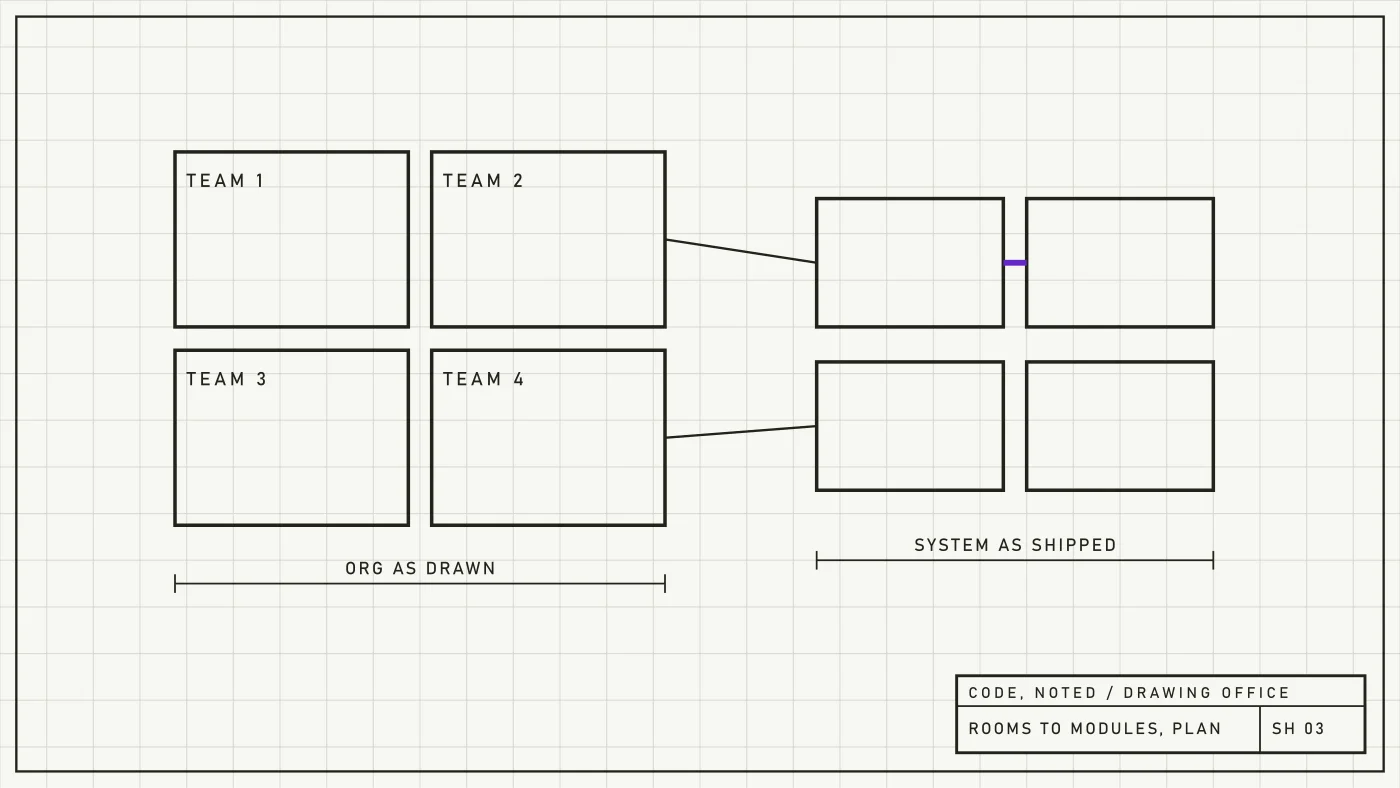
Spending badly looks like this: the architecture review approves a clean four-module design, and the modules are staffed by teams that report into three departments with different quarterly goals. Within a year the interfaces between the modules have grown option flags that exactly express the departments' disagreements. Nobody decided this. Sixty-odd years of evidence say nobody had to.
Spending on purpose has a name now, the "reverse Conway maneuver": shape the teams to match the architecture you want, before you build it. The term is recent; the practice is not. Anyone who ever put the database people in the same room as the reporting people to force a shared schema was performing it without the vocabulary.
The maneuver's limits deserve more press than they get. Teams are not furniture. A reorg announced to "align with the target architecture" spends morale, tenure and tribal knowledge, and the architecture it aligns to is a guess about the future. Reorganize twice on two different guesses and the third target architecture will be greeted with the enthusiasm it deserves. The budget is real but it is not renewable on demand.
There is also a directionality that the slogan hides. Conway's law runs org to system, but systems push back. A shared legacy database makes two teams into one team with two managers, whatever the chart claims; an event bus between them makes the chart honest. I have seen a platform's ownership disputes resolved not by a reorg but by a schema split that made the disputed table stop existing. The cheapest way to change communication structure is sometimes to change the artifact everyone is forced to communicate about, a theme that recurs in what a service boundary is for.
Treating the law as a budget suggests some ledger discipline. Count the interfaces your org chart taxes: every place two teams share a deployable, a schema, or an on-call rotation is a line item. Some are worth paying (shared platforms exist precisely to centralize a cost). Some are historical accidents nobody has re-justified since the 2019 reorg. The audit is dull and takes an afternoon, and it predicts the next year's cross-team friction better than any skills matrix.
The conclusion Conway himself drew in 1968 gets quoted least and ages best: because early design decisions and early team structures constrain each other, flexibility of organization is important to effective design. Not "the org chart is destiny." Something closer to: keep the material workable, because you will be wrong about the first shape. Organizations that treat their structure as poured concrete get the architecture that concrete allows.