 Code, Noted
Leadership
The meeting that replaced the design doc
Organizations drift from written design to verbal consensus one calendar invite at a time. What the written form was doing, and how to notice it going.
Code, Noted2 min readLeadership
No organization decides to stop writing design documents. It happens the way most institutional decay happens: gradually, via substitution. A kickoff call because the doc "isn't ready yet." A whiteboard session that produces photos of a whiteboard. A decision made in a thread, ratified in a standup, remembered in three incompatible versions. Eighteen months later someone asks where the design for the billing pipeline lives, and the answer is a person.
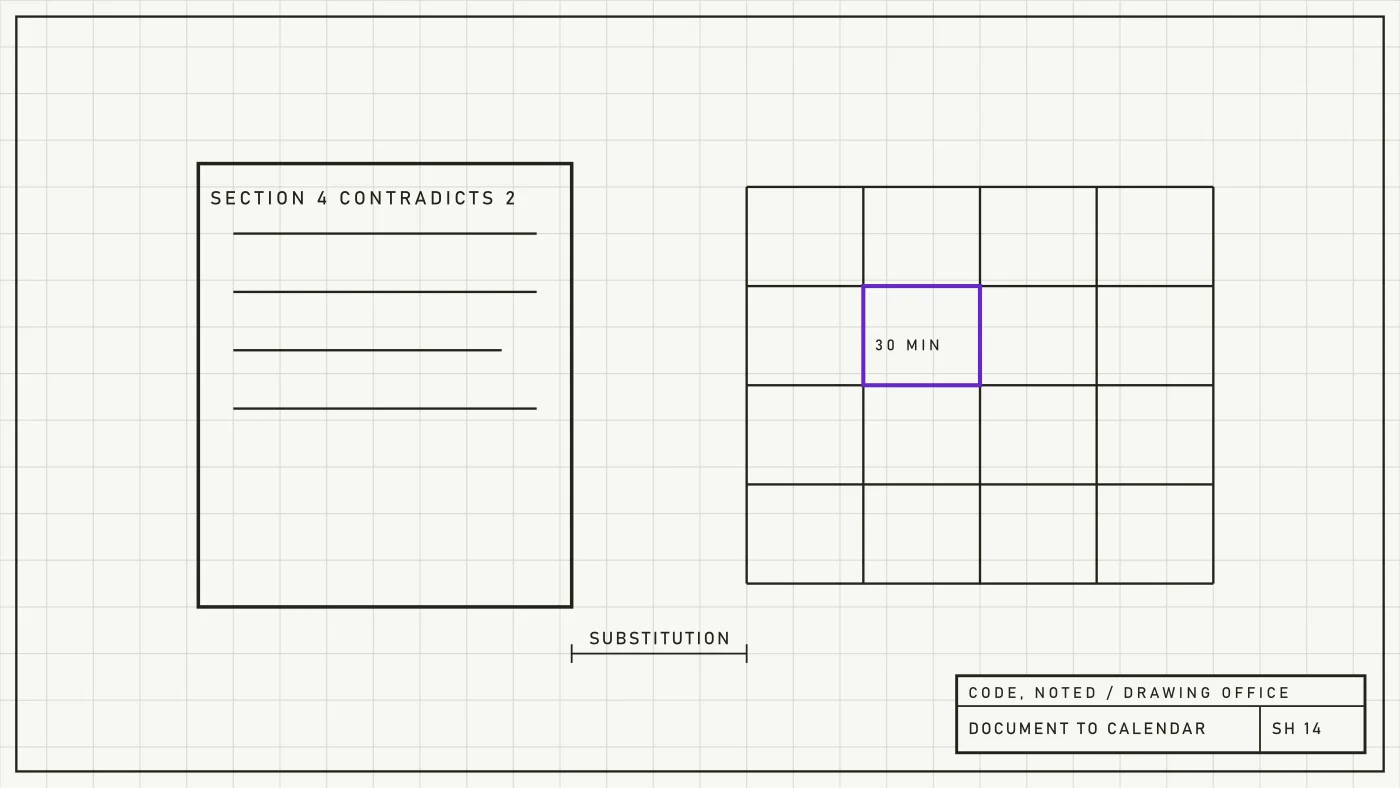
What was lost is worth stating precisely, because the meeting replaces the document's ceremony without replacing its functions. A design doc is, first, a forcing function for the author: prose does not tolerate the hand-wave that a slide survives, and half the value of writing the thing is discovering, mid-sentence, that section four contradicts section two. The Google-tradition practitioners have said this plainly for years; Malte Ubl's design docs at Google describes the artifact as being as much about achieving clarity as about communicating it.
Second, the document is the only format that scales review beyond the room. A meeting's blast radius is its attendee list, biased toward the available and the assertive. A doc circulates to the timezone-distant, the junior engineer who will not interrupt a VP mid-call but will leave a devastatingly correct margin comment, and the reviewer who needs an hour alone with the numbers. Meetings select feedback for confidence. Documents select it for accuracy, or at least give accuracy a chance to register.
Third, and least replaceable: the document persists. Two years on, when the context has rotted and the author has left, the doc, with its alternatives-considered section and its decision records, is the difference between archaeology and memory. The meeting's minutes, where they exist, record who attended. The whiteboard photo records that markers were used.
The drift has causes worth respecting rather than mocking. Writing is slow and its costs land on the author, while its benefits land on the future; meetings feel like progress and end on schedule. Remote work multiplied calendar surface area. And some cultures punish written wrongness more than spoken wrongness, in which case engineers are being rational: never commit to prose what a meeting lets evaporate. That last cause is the tell that the problem is psychological safety wearing a process costume.
Restoration, in shops that have managed it, is less about mandates than about restoring the document's privileges. Decisions above some blast radius require a doc before the meeting, and the meeting's first twenty minutes are silent reading, a practice Amazon made famous and which survives contact with real calendars surprisingly well. Docs get service levels (a named reviewer, a comment deadline) so that writing one is not a message in a bottle. And leadership writes: nothing re-legitimizes the form faster than a director whose own proposals arrive as six pages of falsifiable prose.
The meeting is a fine instrument for the last mile of a decision: the airing of objections, the look in the eye, the commit. It is a terrible system of record. Organizations that let the calendar eat the document trade their institutional memory for a feeling of velocity, and the invoice arrives later, addressed to whoever asks where the design lives.