 Code, Noted
Leadership
When the internal platform goes on sale
Spotify opened a storefront for its internal engineering platform on October 8. An essay on what a platform team becomes when its customers start paying, and what Amazon learned about that in 2006.
Code, Noted3 min readLeadership
On 8 October 2026 Spotify launched technology.spotify.com, a site that sells parts of the engineering platform it built for itself. Four things are on the shelf: Backstage, the developer portal open-sourced in 2020; Confidence, an experimentation platform sold since 2023; Portal, sold since 2024; and Xirp, a tool for running AI coding agents, which went on sale earlier this year. There are no prices. There is a form, and the form reaches a sales team.
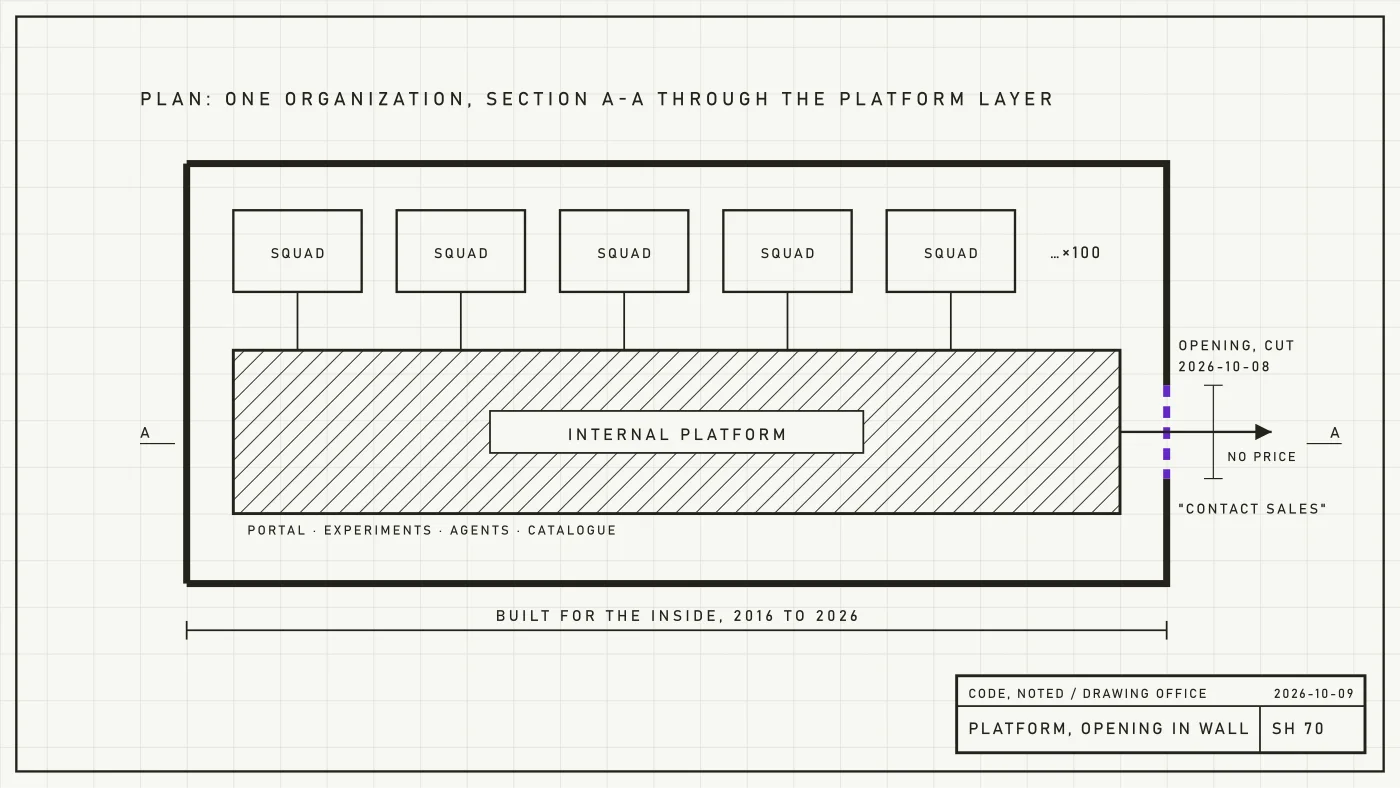
A definition is in order, because the word platform now covers everything from a Kubernetes cluster to a slide. An internal platform is the tooling an organization builds because no vendor's product fits the way it actually works. That is the whole reason it exists, and it is also the problem with selling it. A product is, by construction, something that fits the way other people work.
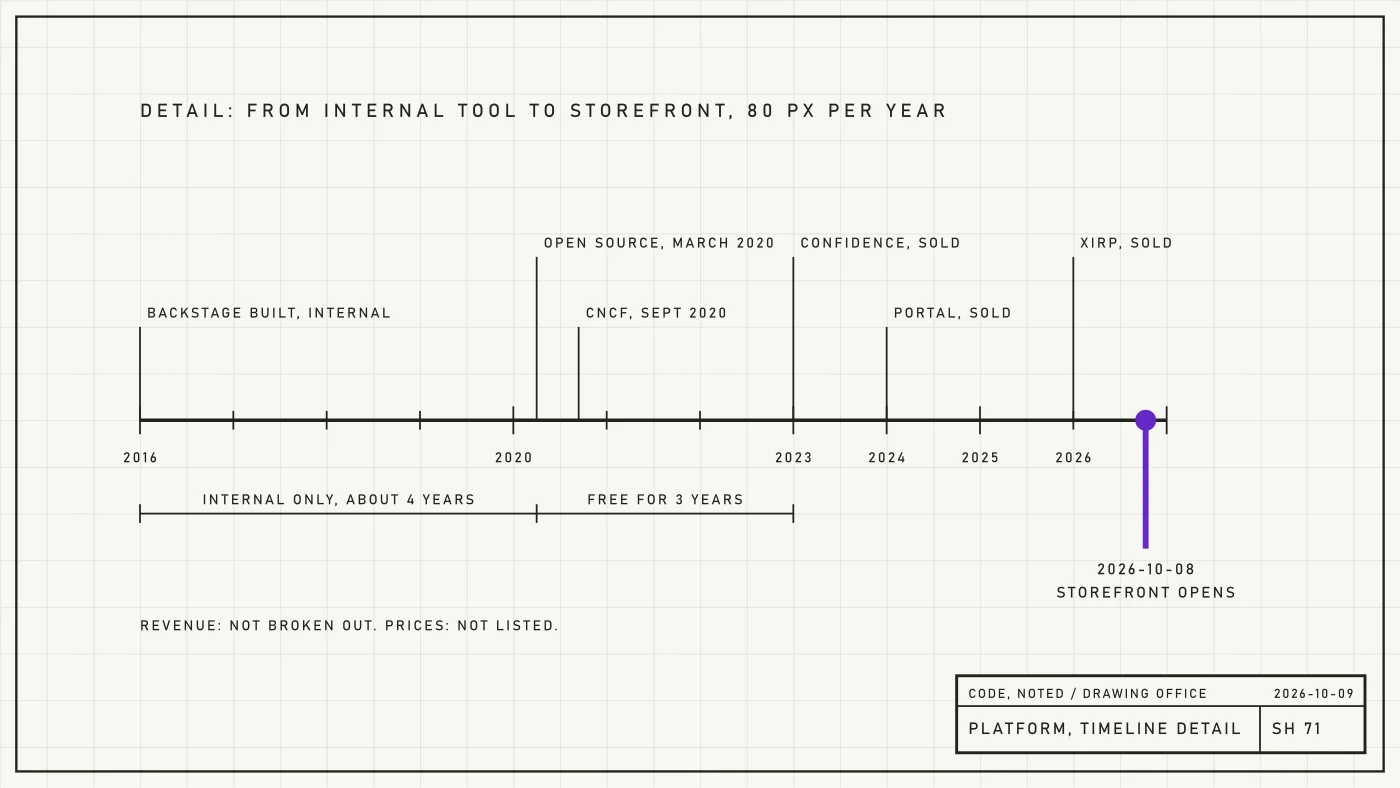
The precedent is older than most of the people now building platforms. On 13 March 2006 Amazon announced S3 and described it, in a sentence that reads differently twenty years on, as "the same highly scalable, reliable, fast, inexpensive data storage infrastructure that Amazon uses to run its own global network of web sites." The infrastructure outgrew the shop. Nobody planning that announcement said so out loud, and I suspect nobody at Spotify is saying it now, but the sentence is the same sentence.
Backstage followed the route that open source made normal. Spotify's 2020 introduction described a tool built about four years earlier, by then carrying over a hundred internal plugins, and offered it to peers who shared the same fragmentation. The CNCF accepted it that September and moved it to incubating in March 2022. The paid products arrived after the free one had done the marketing.
I wrote last December about the platform team's second act, in which a team founded to pave roads is judged, three years on, as a toll booth, and argued that the funding model decides which. This is the third act, and it resolves the funding question in the bluntest way available. A platform with external revenue cannot mandate adoption. Its roadmap is derived from pain again, which was the first act's whole virtue, except that the pain now belongs to strangers who pay. The storefront says the products "run in Spotify's production environment today. Not a prototype. Not a side project." That is a real claim and a useful one. It is also a promise about priority that gets harder to keep every quarter the storefront does well.
The counterargument deserves its room. Amazon's retail business is one tenant among millions on the infrastructure it originated, and has been for most of two decades; the arrangement has not visibly hurt it. Tyson Singer, who runs technology and platform at Spotify, told TechCrunch that behind the consumer app are "hundreds of cross-functional squads shipping products and code day in, day out", which is the argument in one line: the platform was already serving many customers, and the difference between a hundred internal squads and a hundred external ones is an invoice.
Perhaps. The thing to watch is not the revenue, which Spotify does not break out. It is whether the home squads still receive features first, or whether the contact-sales form has quietly become the roadmap. The second act's tragedy was a platform that turned into a department. The third act's would be a platform that turned into a vendor, with its founding customer holding a ticket in the queue like everyone else.