 Code, Noted
Practice
On the colour of the bikeshed, sixty-nine years on
Parkinson's law of triviality is from 1957; the email that renamed it for software is from 1999. Both are quoted weekly and obeyed nowhere. On attention, consequence, and a budget for reviews.
Code, Noted3 min readPractice
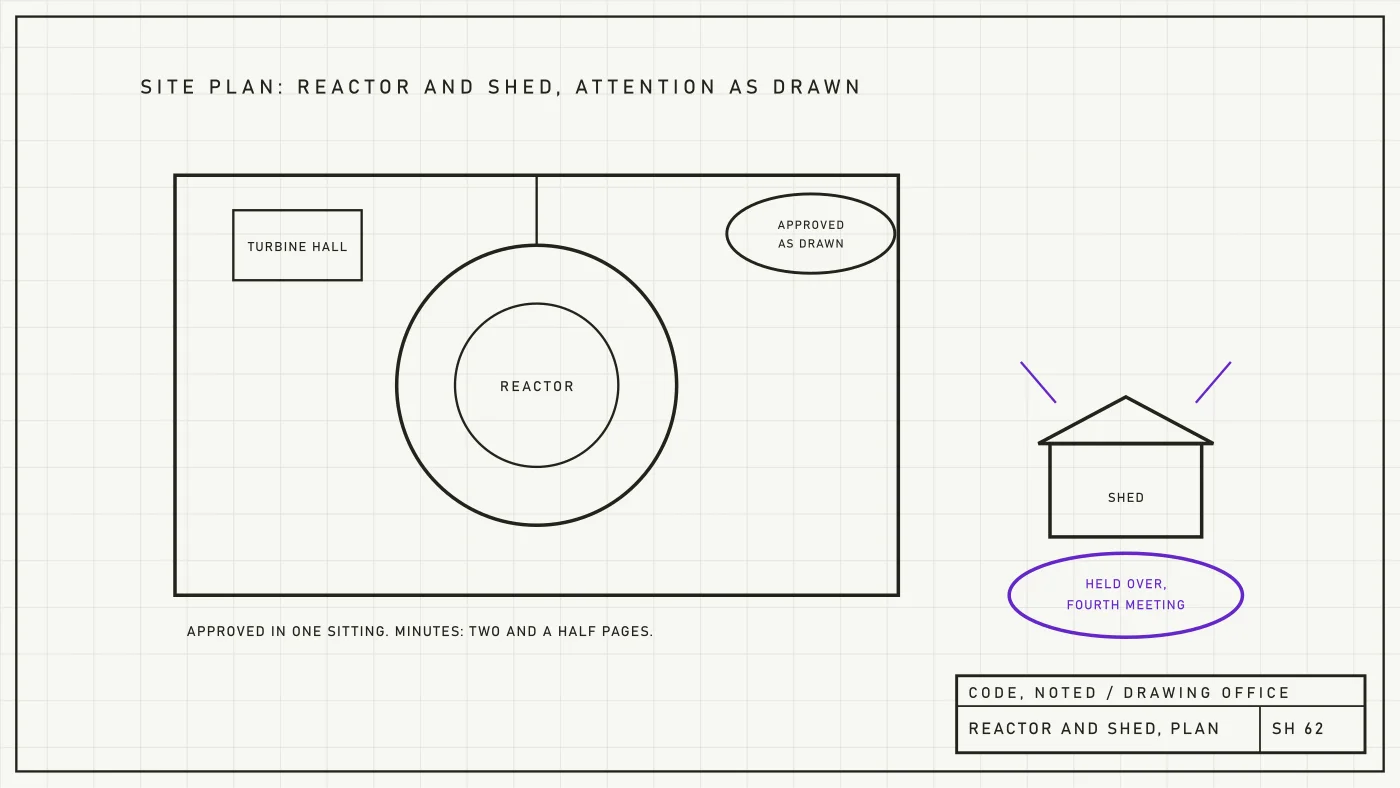
Two documents, forty-two years apart, describe the same meeting. In 1957, C. Northcote Parkinson published the law of triviality: his fictional finance committee approves an atomic reactor in minutes, then argues at length about the staff bicycle shed, because "the time spent on any item of the agenda will be in inverse proportion to the sum involved." Everyone can picture a shed. Nobody on the committee can picture a reactor, and nobody wants to be the one who asks.
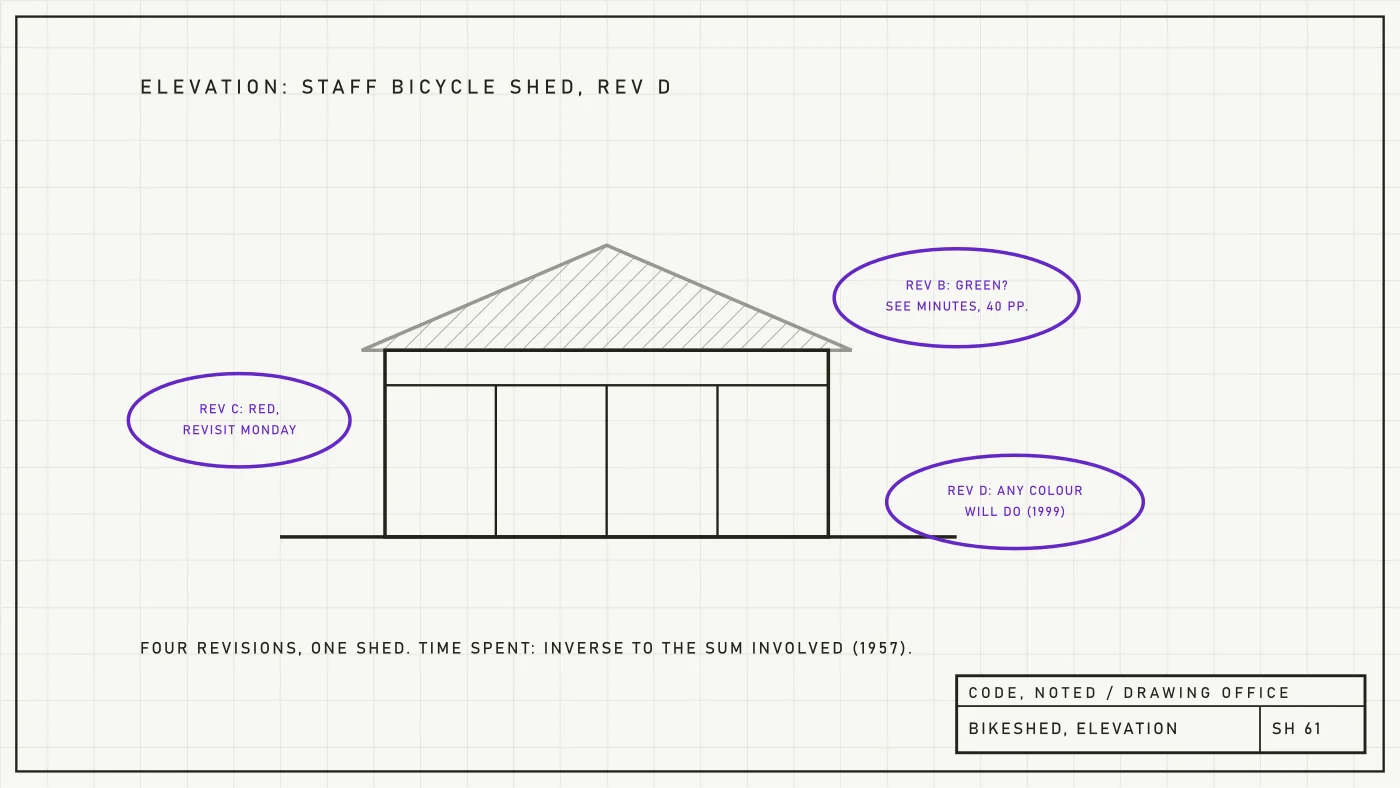
In October 1999, Poul-Henning Kamp sent the FreeBSD lists the email that gave the law its software name: "A bike shed (any colour will do) on greener grass." Kamp had watched a trivial change gather a discussion out of all proportion to its weight, reached for Parkinson, and named the pattern that every code review since has demonstrated on schedule. The email is a quarter century old. It reads like this morning's thread.
the mechanism, stated fairly
The usual telling makes the committee sound foolish, and that is the telling to resist, because the mechanism is not foolishness. It is that competence gates participation. The reactor's design excludes all but two people in the room; the shed admits everyone. A comment thread about a variable name is not evidence that reviewers are petty. It is evidence that the variable name is the only part of the change on which twelve people are qualified to hold an opinion, and eleven of them would like to have contributed something today.
That reading changes the remedy. Scolding people for bikeshedding asks them to stop participating; the useful move is to route the participation. The junior engineer arguing about the name is doing legitimate work on the only surface available to them, and the failure is that nobody handed them a piece of the reactor.
the budget
What we have seen work is not a rule about tone but a budget for attention, set before the review opens. The author declares, in the description, which parts of the change are load-bearing: the schema migration, the retry semantics, the permission check. Review effort is owed there first, and a reviewer who has said nothing about the migration has not finished, however much they have said about the names. The error budget made reliability arguments tractable by giving them a denominator; a review budget does the same for attention. Comment on anything, but the load-bearing list must clear first, and silence on it is a review that has not happened.
The complementary rule is Kamp's, and it survives because it is kind: the colour of the shed is a real decision that somebody should make, once, quickly, and preferably the person painting it. Style goes in a linter, naming goes in a convention document, and both stop being review surfaces at all. What remains on the shed is genuinely open, and a genuinely open trivial question should be settled by the author, in the time it takes to type it.
Sixty-nine years on, the reactor still gets waved through. The fix was never to care less about sheds. It was to make caring about reactors somebody's explicit, budgeted job, because attention does not allocate itself by consequence and never has. Parkinson measured that in 1957. The committee, as ever, moves to the next item.