 Code, Noted
Modernization
Y2K, reconsidered as a success
The disaster that did not happen is remembered as a panic that was wrong. The record says otherwise, and the difference matters for every deadline since.
Code, Noted3 min readModernization
A generation now runs engineering organizations for whom the Year 2000 problem is a punchline: the apocalypse that never came, proof that experts panic and deadlines inflate. The punchline has the history backwards, and the backwards version is quietly shaping how the industry treats every dated risk since.
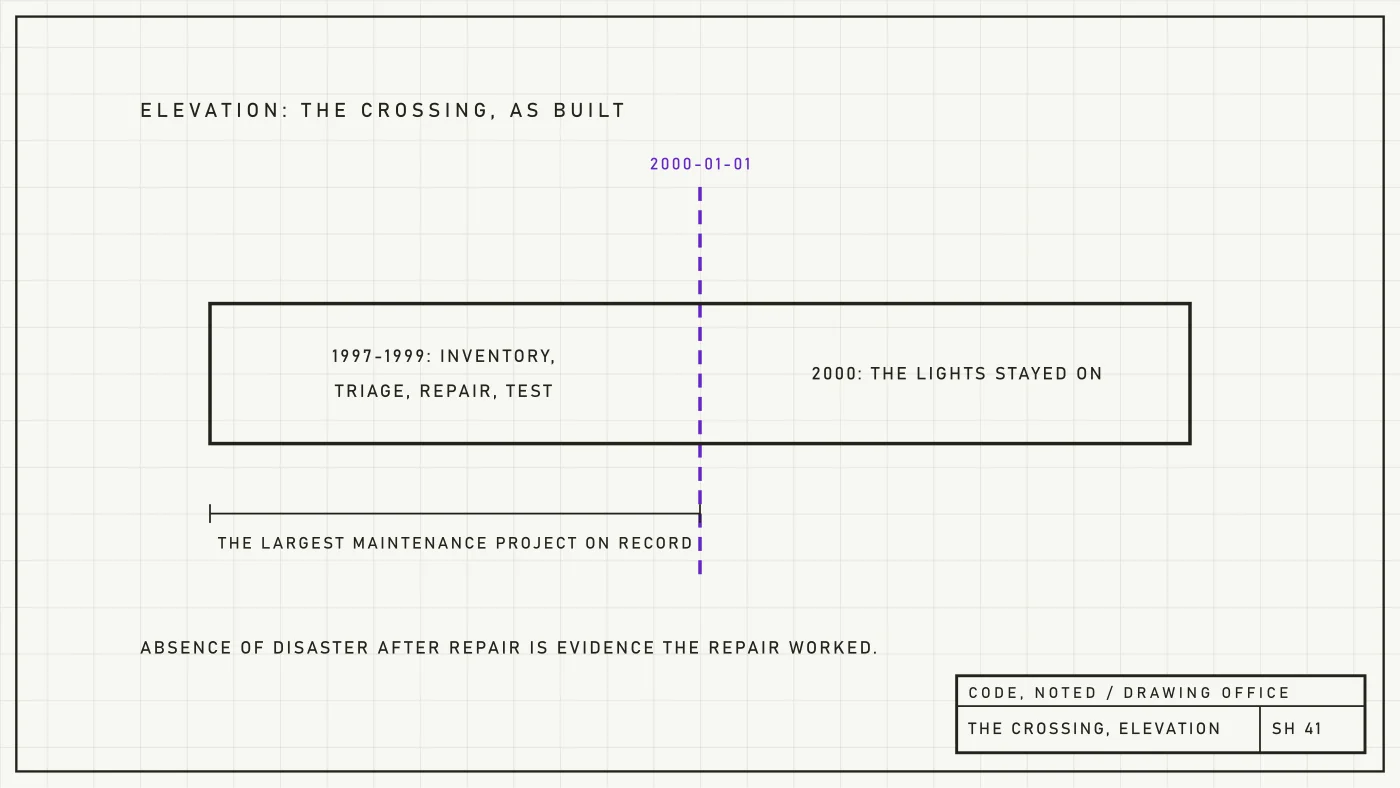
The record, briefly. Two-digit year fields were a rational storage economy in the 1960s that became a global defect as the century turned. The remediation that followed was, by most estimates, the largest coordinated software maintenance effort ever undertaken: hundreds of billions of dollars, years of inventory, triage and testing across banking, utilities, aviation and government, much of it performed on the exact mainframe estates this publication has argued deserve more respect. January 1st, 2000 arrived and the lights stayed on.
Then the interpretation flipped. Because the failures were prevented, the prevention was recast as unnecessary, and "Y2K" entered the language as a synonym for overreaction. The logic deserves to be stated plainly so its error is visible: the absence of disaster after a repair is evidence the repair worked, not evidence it was pointless. Nobody applies the punchline's logic to bridges. The industry applies it to software constantly, and the quiet quarter essay in these pages was about the same accounting failure at ordinary scale. Y2K is that failure at civilizational scale: the largest non-event ever purchased, booked as a joke.
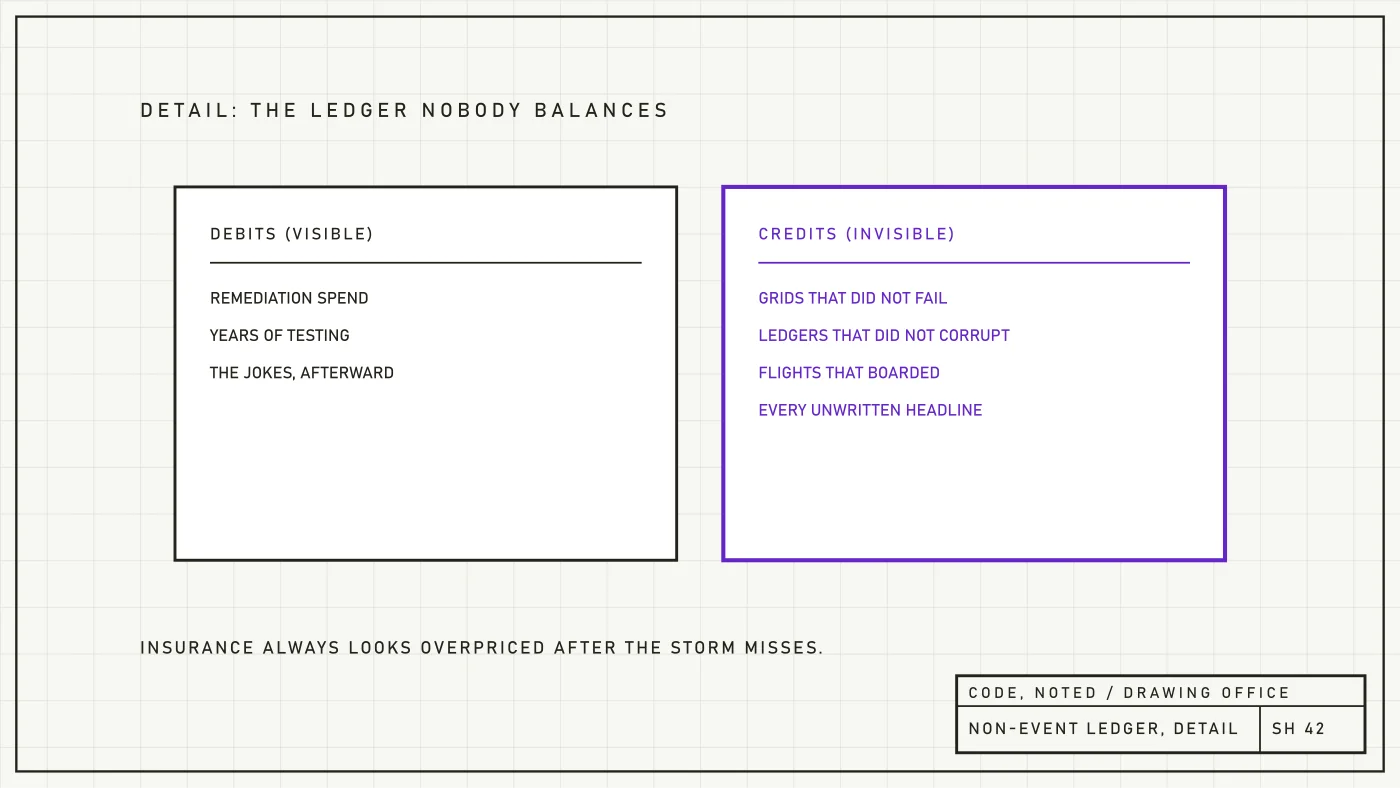
Skeptics note, fairly, that countries and companies that remediated lightly also crossed the line mostly intact, and that some spending was certainly defensive theater. Granted, and the honest reading is still not "nothing would have happened"; it is that triage worked, the critical systems were in fact fixed nearly everywhere, and the marginal spend beyond triage bought certainty rather than function. Insurance always looks overpriced after the storm misses. The alternative pricing method, waiting to see, was available and no serious operator chose it.
What the episode actually demonstrated deserves to be on the curriculum, because it has never been repeated at will. Given an unambiguous deadline, executive attention and budget followed engineering's assessment almost without friction; inventory efforts found the undocumented systems that every estate denies having; and the industry proved it can perform coordinated maintenance across competitive and national boundaries when the date is fixed and shared. Every property that modernization programs struggle to manufacture, urgency, clarity, permission to look under every rock, was briefly, globally present. The technical lesson is almost banal (date your assumptions; storage economies become defects). The organizational lesson is the treasure: hard dates unlock work that soft priorities never do, which is why the calendar entries that resemble Y2K in miniature, the support cliffs and certificate deadlines this publication tracks, are gifts wearing the costume of chores.
The reconsideration, then. Y2K was not a panic that fizzled. It was a maintenance project that finished, on the only deadline in software history that could not slip, and its reward was to be remembered as a joke by the beneficiaries of its success. The engineers who spent 1998 reading COBOL date arithmetic are owed a different sentence, and this publication is happy to print it: they shipped the largest non-event in the industry's records, and non-events, as regular readers know, are the product.